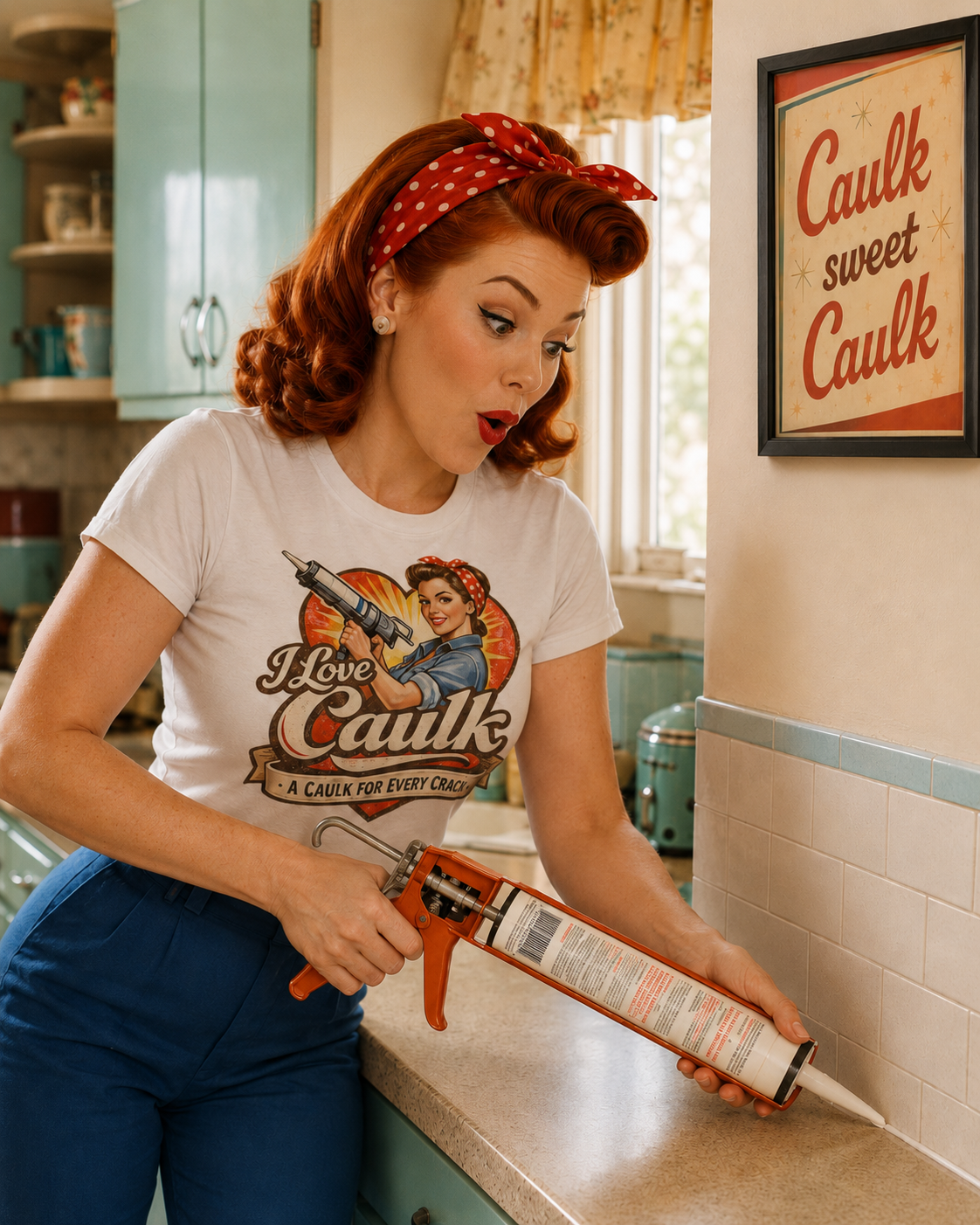
Caulk Types
What's It Made Of, Exactly? A Guide to Caulk Formulations
It’s all about chemistry
Let's be honest: most people grab whatever tube is closest on the shelf and hope for the best. We've all been there. But if you've ever watched a bead of caulk fail six months after you applied it — bubbling up, cracking, peeling away like a bad decision — you know there's more to caulk than meets the eye.
Here's the thing: caulk chemistry matters. Knowing what your caulk is made of tells you almost everything about where it will perform beautifully and where it will let you down spectacularly. And yes, we are very serious about caulk around here. Very. Serious.
So let's get into it. Below is a quick-reference table of the main caulk formulations, followed by a plain-English breakdown of each one. By the end, you'll be the most knowledgeable person in the caulk aisle — and that's a title worth having.
| Formulation | Paintable? | Waterproof? | Flexibility | Best Use Cases | Weakness |
|---|---|---|---|---|---|
| Acrylic Latex | Yes | Moderate | Low–Medium | Interior trim, drywall, painted surfaces | Shrinks over time; not for wet zones |
| Siliconized Acrylic Latex | Yes | Good | Medium | Kitchen/bath trim, windows | Not fully waterproof like silicone |
| 100% Silicone | No* | Excellent | Very High | Wet zones, glass, metal, exterior | Cannot be painted over |
| Polyurethane | Yes | Excellent | High | Exterior joints, concrete, wood, masonry | Longer cure; isocyanate sensitivity |
| Butyl Rubber | Yes | Excellent | Medium | Flashing, gutters, roofing, RV | Messy, slow cure, strong odor |
| Elastomeric Latex | Yes | Good | Very High | Exterior siding, high-movement joints | Not for constant immersion |
| Acoustic / Non-Hardening | No | Moderate | Permanent flex | Soundproofing wall assemblies | Not for water exposure |
| Hydraulic Cement | Yes | Excellent | None (rigid) | Active water leaks in masonry | Rigid — cracks under movement |
| MS Polymer / Hybrid | Yes | Excellent | Very High | Multi-substrate, high-end exterior | Higher cost |
* Some specialty "paintable silicone" products exist (e.g., DAP Silicone Plus) but results vary by paint type. Test first.
Now Let's Talk About Each One
Acrylic Latex — The Reliable Workhorse
Acrylic latex is the caulk that built America's baseboards. It's the most common formulation you'll find on any hardware store shelf, and for good reason: it's easy to apply, easy to clean up with water, and — crucially — it takes paint like a dream. If you're sealing interior trim, filling the gap between drywall and a door frame, or touching up painted surfaces, acrylic latex is your go-to. The caveat? It has modest waterproofing capability and does shrink a little over time as it cures. Keep it away from sinks, showers, and anywhere that sees regular moisture. Think of it as the dependable, paint-friendly friend who handles business indoors but doesn't love the rain.
Siliconized Acrylic Latex — The Upgrade
Take acrylic latex, blend in some silicone for added water resistance and flexibility, and you get siliconized acrylic latex — the middle ground that a lot of kitchen and bathroom projects actually call for. It's still paintable (huge win), still cleans up with water while wet, and it handles humidity and the occasional splash far better than plain acrylic. It's a popular choice around sink perimeters, window frames, and bathroom trim where you want solid performance without committing to the no-paint-ever world of pure silicone. Just know that "good" waterproofing isn't the same as "excellent" — for a steam shower or a submerged application, you'll want to keep reading.
100% Silicone — The Gold Standard for Wet Work
If caulk were a superhero, 100% silicone would be the one with the cape. Exceptional waterproofing, extreme flexibility, adhesion to glass, metal, and non-porous surfaces — silicone simply doesn't quit. It's the right call for sink seams, shower surrounds, tub edges, exterior glass, and anywhere that sees constant moisture or wide temperature swings. The one thing you need to make peace with: silicone cannot be painted over. Once it's down, it stays exactly the color it is. A small concession for a caulk that will outlast your patience with any other formulation. There's a reason professionals reach for it first on wet applications. It's the caulk that performs when the stakes are high — and isn't that all any of us really want?
Polyurethane — The Exterior Specialist
Polyurethane caulk is built for the hard stuff: exterior joints, concrete expansion gaps, wood siding, masonry, driveways. It bonds tenaciously to porous and semi-porous materials, handles movement well, and delivers excellent waterproofing — all while being paintable. It cures to a tough, durable finish that stands up to UV exposure and temperature extremes far better than latex-based options. The trade-offs are real, though: polyurethane takes longer to cure than other formulations, and some products contain isocyanates, which means you'll want proper ventilation and gloves. It's not fussy caulk — it's serious caulk, for serious gaps that demand long-term performance.
Butyl Rubber — The Roofing and Flashing Legend
Butyl rubber has been quietly sealing roofs, gutters, flashing, RVs, and HVAC systems for decades, and it has absolutely no interest in being glamorous about it. This formulation bonds to metal, masonry, wood, and virtually any porous surface, handles extreme weather conditions, and waterproofs with conviction. What it lacks in charm it makes up for in staying power. Fair warning: butyl rubber is notoriously messy to work with — it's sticky, slow to cure, and has a strong smell that's best enjoyed outdoors and only with adequate airflow. But if your gutter is leaking or your flashing is failing, butyl is the caulk that will actually fix it.
Elastomeric Latex — The Flexible Exterior Performer
Elastomeric latex was designed for joints that move. Exterior siding, stucco, masonry, and wood all expand and contract with the seasons, and a rigid caulk simply can't keep up — it cracks, separates, and fails. Elastomeric caulk stretches and recovers, staying bonded even as the substrate shifts underneath it. It's paintable, has solid waterproofing capability, and is particularly popular for siding and high-movement exterior applications. The one place it won't serve you: constant immersion. It's an exterior performer, not an underwater one. But for everything above the waterline that needs to flex and forgive, elastomeric latex delivers.
Acoustic / Non-Hardening Caulk — The Quiet One
Acoustic caulk is a different animal entirely. Where other formulations cure to a solid or semi-solid state, acoustic caulk stays permanently flexible — it never truly hardens. That permanent pliability is the whole point: in soundproofed wall assemblies, this caulk fills gaps around electrical boxes, along plates, and at perimeter seams to stop sound from traveling through air channels. It's used by acousticians, home theater builders, and anyone serious about sound isolation. It won't win any waterproofing awards, and it isn't designed for surface exposure, so don't reach for it to seal your tub. But if you're building a recording studio or trying to keep your teenager's drum practice from being everyone's problem, this is the formulation for you.
Hydraulic Cement — The Emergency Responder
Hydraulic cement isn't caulk in the traditional sense — it's a fast-setting, water-activated patching compound designed for one specific situation: stopping active water leaks in concrete and masonry. If water is actually seeping through a crack in your basement wall right now, hydraulic cement is what you reach for. It sets in minutes, even in the presence of flowing water, and provides rock-solid waterproofing. The trade-off is right there in the description: rock-solid. Hydraulic cement is completely rigid — zero flexibility — which means it will crack if applied to joints that experience any movement. It's not a joint sealant. It's an emergency responder. Identify the leak, plug it fast, and respect the fact that this material is playing an entirely different position than the rest of the formulations on this list.
MS Polymer / Hybrid — The Premium All-Rounder
MS Polymer (moisture-cure silyl-terminated polymer, for those who want the full mouthful) is where caulk technology lands when you want the best of all worlds. It's paintable like latex, flexible and waterproof like silicone, bonds to almost every substrate including wood, metal, concrete, plastic, and glass, and doesn't contain isocyanates like polyurethane. It's the formulation that professional applicators reach for on high-end exterior projects, curtain walls, and multi-substrate assemblies where you need one product to do everything well. The honest downside: MS polymer products cost more than traditional formulations. But when you're doing a job that needs to last and can't afford a failure, the premium is justified. Sometimes you get exactly what you pay for — and with MS polymer, you really do.
So, Which Caulk Should You Use?
The right caulk depends on where it's going, what it's sealing, and whether you need to paint it. In short:
Interior trim and drywall? Acrylic latex or siliconized acrylic latex.
Kitchen and bath wet zones? 100% silicone.
Exterior joints, concrete, masonry? Polyurethane or MS polymer.
Gutters, flashing, roofing? Butyl rubber.
Exterior siding with movement? Elastomeric latex.
Soundproofing assemblies? Acoustic / non-hardening.
Active water leak in masonry? Hydraulic cement, immediately.
You want one product for everything outdoors? MS polymer hybrid.
If you're still not sure, try our Caulk Finder — it'll ask you a few quick questions and point you to exactly what you need. Because around here, we believe that everyone deserves a great caulk. And we're not even a little embarrassed to say it.